
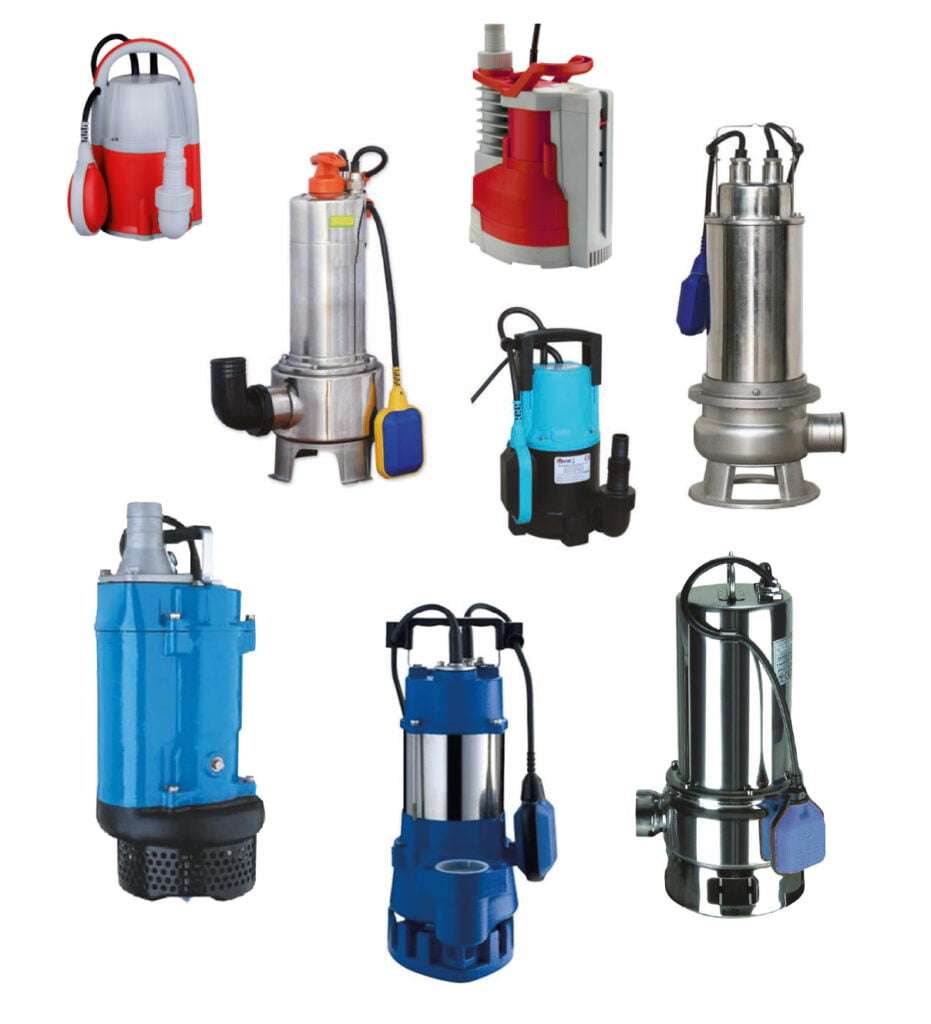
Description
Best fit: homes, housing estates, agricultural irrigation, industrial plants and construction sites drawing water from a deep well, and any application where the water sits deeper than a surface pump could ever lift it by suction.
A submersible pump is lowered into the water with its motor and hydraulics together. A surface mounted pump has to suck water upwards, and atmospheric pressure puts a physical ceiling on that suction; below a certain depth a surface pump simply cannot draw the water. A submersible does not suck, it pushes. Its depth limit therefore comes not from suction but from the head it can generate and from the strength of the riser pipe, cable and safety rope carrying it.
Well pumps are multistage: each stage produces part of the total pressure, and head increases as stages are added. The total head required for a correct selection is the dynamic water level in the well plus the pressure wanted at the surface plus pipe friction losses. The most common mistake here is calculating from the static level: while the pump runs, the level in the well drops and a drawdown cone forms, so the real lift is higher than the figure on paper.
Flow is set by the well, not by the pump. If the pump draws more than the well can yield, the level falls below the intake, the pump delivers water mixed with air and ends up running dry. A well yield test is therefore carried out before selection, and the pump is placed at a duty point below the sustainable yield of the well. For the same reason a level electrode or dry running protection is treated as mandatory rather than optional.
A submersible motor is cooled by the water flowing past it. If the borehole is much wider than the pump, or the pump sits above the screened section, there is not enough flow around the motor; a flow sleeve (cooling shroud) is then used. Sand and solids in the water erode the stages and shorten both efficiency and service life; well development, a sand separator and the correct installation depth reduce that wear considerably.
The electrical side is part of the selection too. As depth increases the cable gets longer, and a cable cross section chosen without allowing for voltage drop will strain the motor. A soft starter or a variable frequency drive reduces both starting current and water hammer in the rising main. A check valve, a watertight cable joint, wellhead equipment and a safety rope are parts of the installation that must not be skipped.
Key Features
- Multistage hydraulics: high head in deep boreholes
- Motor running submerged: no suction limit, low noise and no frost risk
- Stainless bodies and stage options resistant to sand erosion
- Dry running, overcurrent and phase failure protection
- Reduced starting current and water hammer with a VFD or soft starter
- Complete installation: wellhead equipment, check valve, watertight cable joint and safety rope
- Automatic start and stop from a tank float switch or pressure control
How to Choose
- Flow: the sustainable yield of the well governs. No pump is selected before a well yield test; a pump that over-draws exhausts both the well and itself.
- Head: dynamic water level + pressure wanted at the surface + pipe losses. Calculating from the static level is misleading.
- Borehole diameter and depth: the pump and motor must physically fit; installation depth follows the screened section and the dynamic level.
- Water quality: sand content, iron and manganese, salinity — these directly decide materials and stage type.
- Electrical: cable cross section is chosen by calculating the voltage drop over the depth, and panel protection follows from it.
- Control: level protection, automatic start and stop, tank float or constant pressure control are planned from the outset.
Get a free site survey and a quote for your project: (0501) 557 80 89 · bilgi@projenza.com
Reviews
There are no reviews yet.