
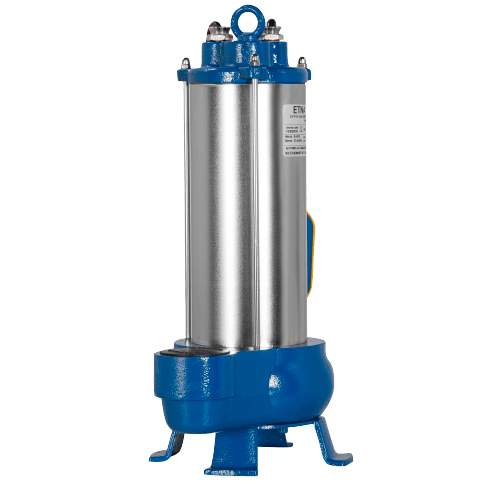
Description
Best fit: basements, car parks, lift pits, plant rooms and technical spaces where collected water cannot drain by gravity and has to be pumped up to the discharge line.
A drainage pump lifts water that collects in spaces below sewer level out of a sump and into the discharge line. Rain ingress, ground water, plumbing leaks, wash-down water and water left after firefighting are all removed this way.
The first decision is the type of water. Drainage pumps are made for clean and lightly soiled water with small particles. Foul water with a toilet connection, or waste water carrying fibres and solids, is not a job for a drainage pump: that calls for a vortex impeller or a grinder waste water pump. The wrong choice means blockages, repeated failures and flooding.
The volume of the sump decides how often the pump runs. A sump that is too small makes the pump start and stop constantly, the motor heats up and its life is cut short; the float also needs clear space to move freely. Without a non-return valve on the discharge line the pumped water flows straight back and the pump keeps working for nothing.
In spaces such as lift pits, electrical rooms and server rooms, standing water is a safety issue rather than a comfort issue; automatic operation and a level alarm are preferred there. At critical points a second pump or an alarmed standby arrangement prevents damage when one pump fails.
In submersible pumps the motor is cooled by the water around it, so dry running destroys it quickly. Thermal protection, the correct float level and regular maintenance (cleaning the impeller and the suction strainer) decide most of the service life.
Key Features
- Submersible and dry-installed options; hydraulics suited to clean and lightly soiled water
- Automatic float control: starts and stops by itself according to level
- Stainless steel, cast iron or engineering plastic housing alternatives
- Thermal motor protection and overload safety
- Models separated by the maximum solid particle size they pass
- Level alarm and standby pump for double safety in critical spaces
How to Choose
- Type of water: clean and lightly soiled, or waste water with fibres and solids. The hydraulic choice follows from this.
- Flow and head: incoming water volume, sump depth and the level of the discharge line are calculated together.
- Particle passage: the largest solid the pump can pass must match the application.
- Sump volume and float: start frequency and clear travel for the float switch.
- Discharge line: non-return valve and correct pipe size; blockage and backflow risk are assessed.
- Criticality: lift pits, electrical rooms and server rooms are planned with a standby pump and an alarm.
Get a free site survey and a quote for your project: (0501) 557 80 89 · bilgi@projenza.com
Reviews
There are no reviews yet.