
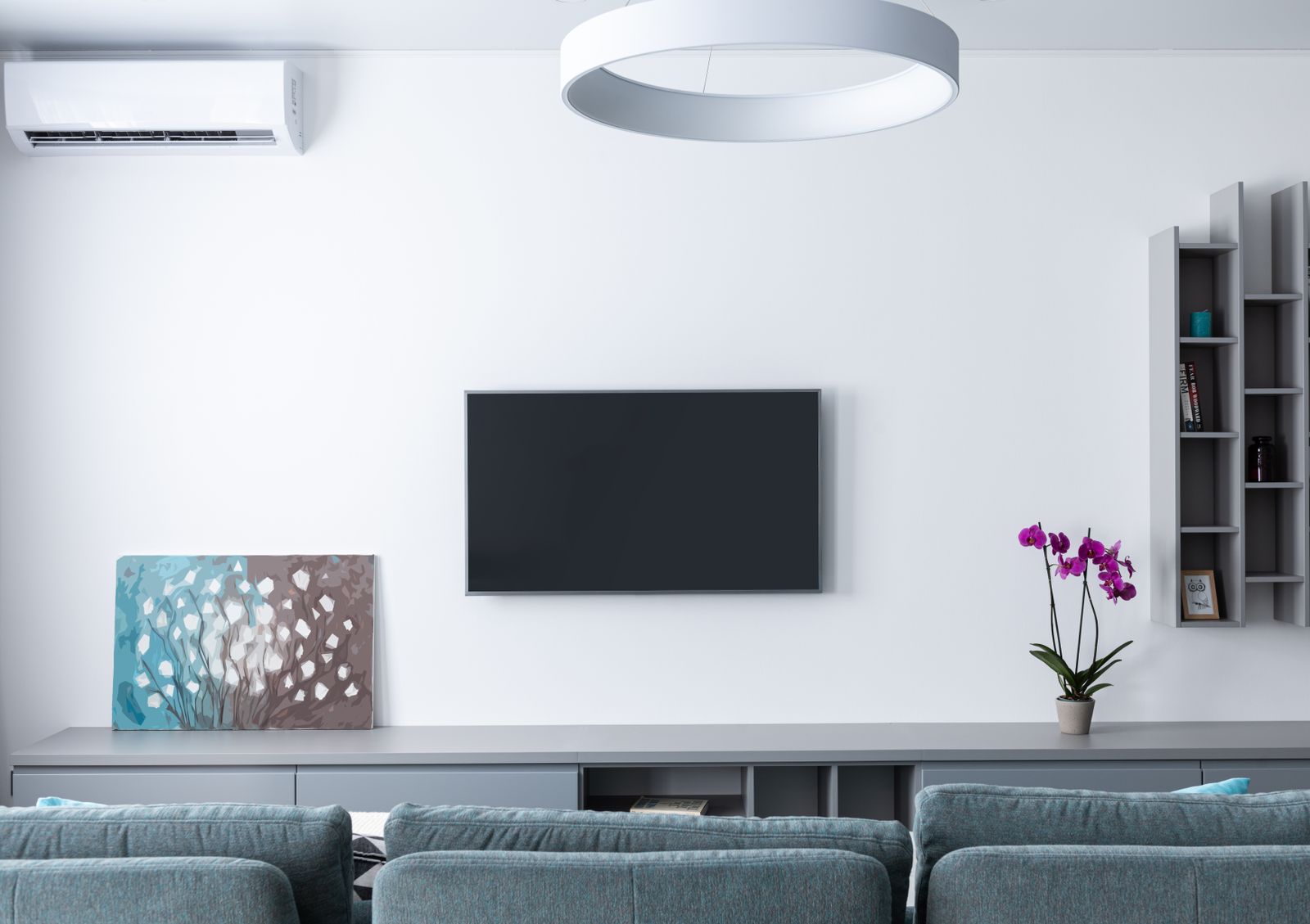
Description
Where it is the right choice: flats, villas and single-room cooling. In living spaces used for long hours, the difference an inverter model makes shows on the bill in the first season.
A domestic split unit is the most practical way to cool a single space and to add heat when the season calls for it. But half the comfort is the unit and half is the installation: pick the wrong capacity and an undersized unit runs non-stop, while an oversized one short-cycles, fails to remove humidity and leaves an uncomfortable chill.
We do not treat capacity as a matter of floor area alone. Façade orientation, glazed area, insulation, ceiling height and the people and equipment in the room all enter the calculation; two rooms of the same size call for different capacities when one of them faces south or sits directly under the roof. On the installation side the vacuum procedure is a standard for us, not a negotiation — a skipped vacuum comes back as lost efficiency and early compressor failure.
An air conditioner does not create heat, it moves it: in summer it pushes indoor heat outside, and in winter it draws heat out of the cold outdoor air and delivers it inside. Working as a heat pump when it heats is why it gives noticeably more warmth than a resistive electric heater for the same electricity. But as the outdoor air gets colder, both the heat that can be drawn from it and the efficiency of the unit fall; if you intend to heat with it through the winter, ask about behaviour at low outdoor temperatures as well as the seasonal figure on the label.
Key Features
- Inverter compressor: it adjusts speed to demand and glides at low speed instead of stopping once the target is reached
- High energy class models; the SEER (cooling) and SCOP (heating) figures on the label show real seasonal efficiency
- Can be used as a supplementary heat source in winter — models with a high SCOP run economically in an Ankara winter
- A correct BTU calculation per room, including façade, insulation, glazing and how intensively the space is used
- Quiet running at low speed — in a bedroom or a study, noise is the invisible half of comfort
- Vacuumed installation, pipe runs kept within the manufacturer specification, proper condensate drainage and guaranteed workmanship
How to Choose
- Capacity: floor area is a starting point, not a decision. At the survey we calculate the real heat load.
- Inverter? The clear choice in any space with long running hours; the saving on a fixed-speed model closes within the first season.
- Will you heat with it in winter? If so, look closely at the SCOP figure and the low-temperature performance.
- Outdoor unit position: a spot out of the sun with air circulation adds both efficiency and service life.
- Indoor unit position: the discharged air should not blow straight at where you sit or sleep; a layout that sweeps the room feels more comfortable at the same set point.
- Maintenance: a filter and refrigerant check once a year; a dirty filter and low charge do the same cooling with more electricity.
Get a free site survey and a quote for your project: (0501) 557 80 89 · bilgi@projenza.com

Reviews
There are no reviews yet.