
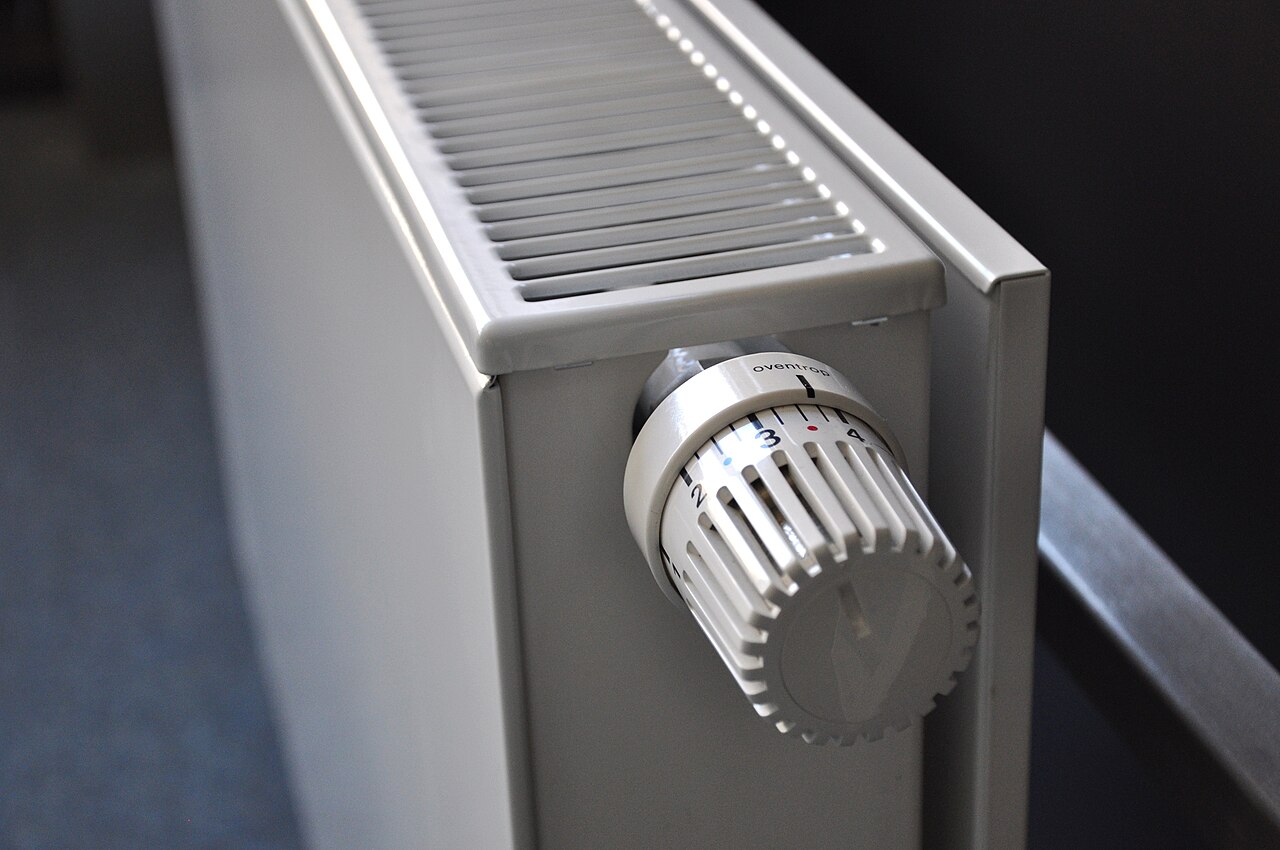
Description
Best fit: homes and offices that need to warm up quickly, layouts where every room is set to its own temperature, refurbishments that keep the existing pipework, buildings where the floor cannot be opened up, and the bathrooms and north-facing rooms where underfloor heating alone falls short.
A radiator is a heat emitter, and the heat it gives out comes from the difference between the mean water temperature inside it and the air in the room. That single sentence turns radiator selection from a shopping decision into a system decision: the same radiator gives noticeably less heat once the flow temperature of the installation has been lowered. So a radiator is sized first against the heat loss of the room, and immediately afterwards against the temperature regime the system will run at.
A low flow temperature is no longer a constraint but a target: a condensing boiler or a heat pump only enters the range where it works efficiently while the return water is cool enough. On the radiator side that translates into more surface, because as the temperature difference narrows, more surface is needed to deliver the same heat. A generously sized radiator is therefore not waste; it is what opens up the range in which the heat source can work efficiently.
Where a radiator sits decides comfort as much as output. Placing it under the window began as a way to meet the cold draught falling off the glass; with insulated glazing that obligation eases and the layout becomes freer. What does not change is the matter of obstructions: furniture pushed in front of it, a long curtain or a decorative cover blocks the radiant path and disturbs the air movement the surface depends on, and the measured loss usually turns out larger than expected.
A radiator installation is not the sum of individual radiators but a distribution problem. In a system that has never been balanced the water takes the easiest path: the radiators near the pump take the flow, the far room stays cold, and the flow temperature is raised in the belief that this is the cure, so the whole building runs expensively in order to heat one room. Balancing valves and presettable radiator valves share the flow out according to what the rooms actually need.
A thermostatic radiator valve settles each room on its own and puts free gains from the sun and from occupancy to use; but as the valves close, a fixed speed pump drives the pressure up and the pipework starts to make noise. Its proper partner is a pump that drops its speed as pressure rises. What remains is the health of the system itself: a radiator cold across the top means trapped air and is bled, while one cold along the bottom points to sludge settling out. A system filter, a magnetic separator and a flush where needed are the maintenance that decides how long radiators last in an installation that mixes different metals.
Key Features
- Surface selected against the heat loss of the room and the temperature regime of the installation
- Generous sizing suited to a low flow temperature, working with condensing boilers and heat pumps
- Steel panel, cast iron and aluminium options, trading thermal mass against speed of response
- Presettable radiator valves and balancing valves that share the flow evenly between rooms
- Thermostatic radiator valves for room by room control and use of free heat gains
- A pressure controlled variable speed pump for quiet operation as the valves close
- Air vents, a system filter and a magnetic separator protecting the installation from air and sludge
How to Choose
- Heat loss of the room: external wall and glazed area, insulation, position in the building and how the room is used.
- Temperature regime of the system: flow and return temperature, and whether the heat source is a condensing boiler or a heat pump.
- Position and obstructions: under a window or on a free wall, and whether furniture, a curtain or a cover will sit in front of it.
- Material and response: thermal mass helps in a continuously heated space, while fast response matters in one used intermittently.
- Control scheme: thermostatic valves, room thermostat, weather compensation and a pump that suits them.
- Condition and maintenance: how dirty the existing pipework is, water quality, filtering and flushing, and a record of the balancing.
Get a free site survey and a quote for your project: (0501) 557 80 89 · bilgi@projenza.com

Reviews
There are no reviews yet.