Description
Best fit: apartments and detached homes, small offices and shops, and any building where each unit manages its own heating and hot water — typically where a central plant cannot be installed or where independent billing per unit is the priority.
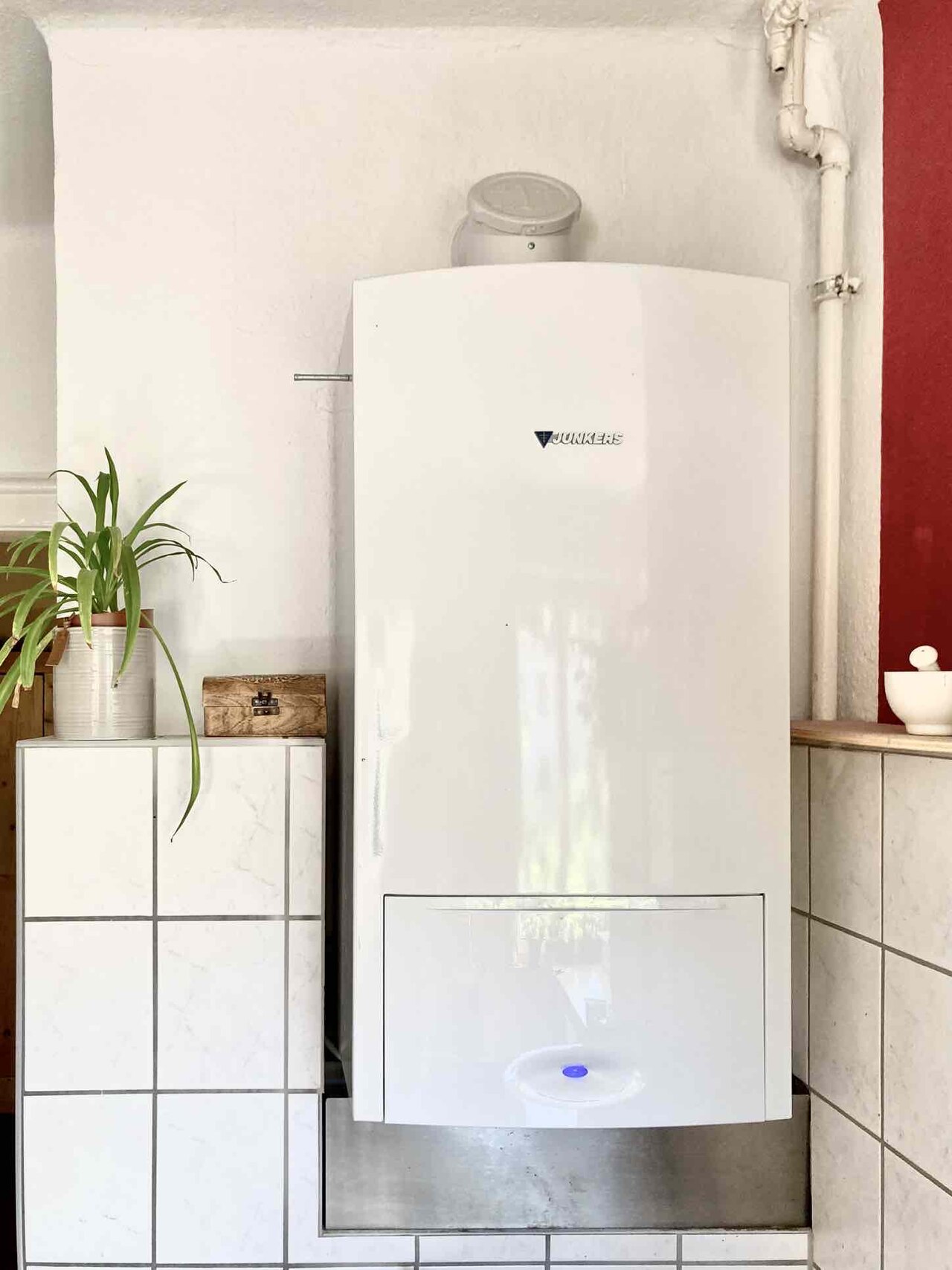
A combi boiler puts space heating and instantaneous domestic hot water into a single wall hung appliance. Each unit runs and pays for its own heat, which is why this type dominates apartment housing. The consequence is that selection sits at the intersection of two very different demands: the heat loss of the space, which changes slowly, and the hot water draw, which is short, sharp and unforgiving of undersizing.
Condensing operation is a hydraulic condition, not a badge on the appliance. Heat is recovered when water vapour in the flue gas condenses on the heat exchanger, and that happens only when the water returning from the system is cold enough. Put the same condensing appliance on an installation designed around high flow temperatures and it behaves much like a conventional boiler. This is why radiator surface, the temperature regime of the system and compatibility with underfloor heating matter as much as the appliance itself.
Sizing and modulation range decide what happens for most of the year. Because the hot water draw governs the choice, the appliance installed is usually far larger than the building’s heating load. In mild weather, if the lowest output the boiler can hold still exceeds what the building needs, the burner lights and goes out over and over — short cycling, which eats efficiency and wears both the ignition and the exchanger. The answer here is not a bigger appliance but a wide modulation range and a control that lets the boiler run long and low.
Most of the recoverable saving sits in the control layer. A simple on and off room thermostat forces the appliance to swing; a modulating thermostat lets it settle. Weather compensation goes a step further: as the outdoor temperature rises the flow temperature slides down a curve, the return water stays cold and the appliance holds the condensing region for longer. Hydraulics must agree with this — thermostatic radiator valves closing against a fixed speed pump raise pressure and noise, so a variable speed pump or a correctly sized bypass belongs to the same design.
What shortens a combi’s life is usually water, flue and neglect rather than the burner. The passages of the hot water exchanger are narrow and sensitive to scale and to sludge carried from old pipework, so fill water hardness, a system filter and a magnetic separator are part of the installation and not accessories. Condensate from a condensing appliance is acidic and needs a sound drain route protected against freezing. Expansion vessel pre charge is set against the static height of the system, the safety valve discharge is taken to a point where it can be seen, and combustion is verified by flue gas measurement at commissioning and at every annual service.
Key Features
- Heating and instantaneous hot water in one appliance, with independent operation and separate billing per unit
- Condensing operation recovers latent heat from the flue gas — the condition is that the return water stays cold
- A wide modulation range reduces short cycling in mild weather
- Weather compensation and a modulating room thermostat give a sliding flow temperature
- A room sealed balanced flue draws combustion air independently of the room
- System filter and magnetic separator protect the heat exchanger and extend its life
- Expansion vessel, safety valve and frost protection for safe unattended operation
How to Choose
- Heat loss calculation: output is set by the building’s real heating load, with insulation condition and glazed area as inputs.
- Hot water demand: how many taps and showers may run at once and the comfort expected; a pre heated or storage type solution if needed.
- Temperature regime of the system: radiators or underfloor heating, and whether the return temperature allows condensing at all.
- Flue and gas infrastructure: room sealed terminal, any shared flue situation, the condensate drain route and its exposure to frost.
- Water quality: hardness of the fill water, the condition of existing pipework, filtration and a flushing programme.
- Control and service: thermostat type, whether an outdoor sensor can be run, service coverage and an annual maintenance routine.
Get a free site survey and a quote for your project: (0501) 557 80 89 · bilgi@projenza.com
Reviews
There are no reviews yet.