Description
Where it fits: Apartment blocks, housing complexes and mid-scale facilities — the range where a plastic tank no longer holds enough and a modular panel tank is more than the project needs.
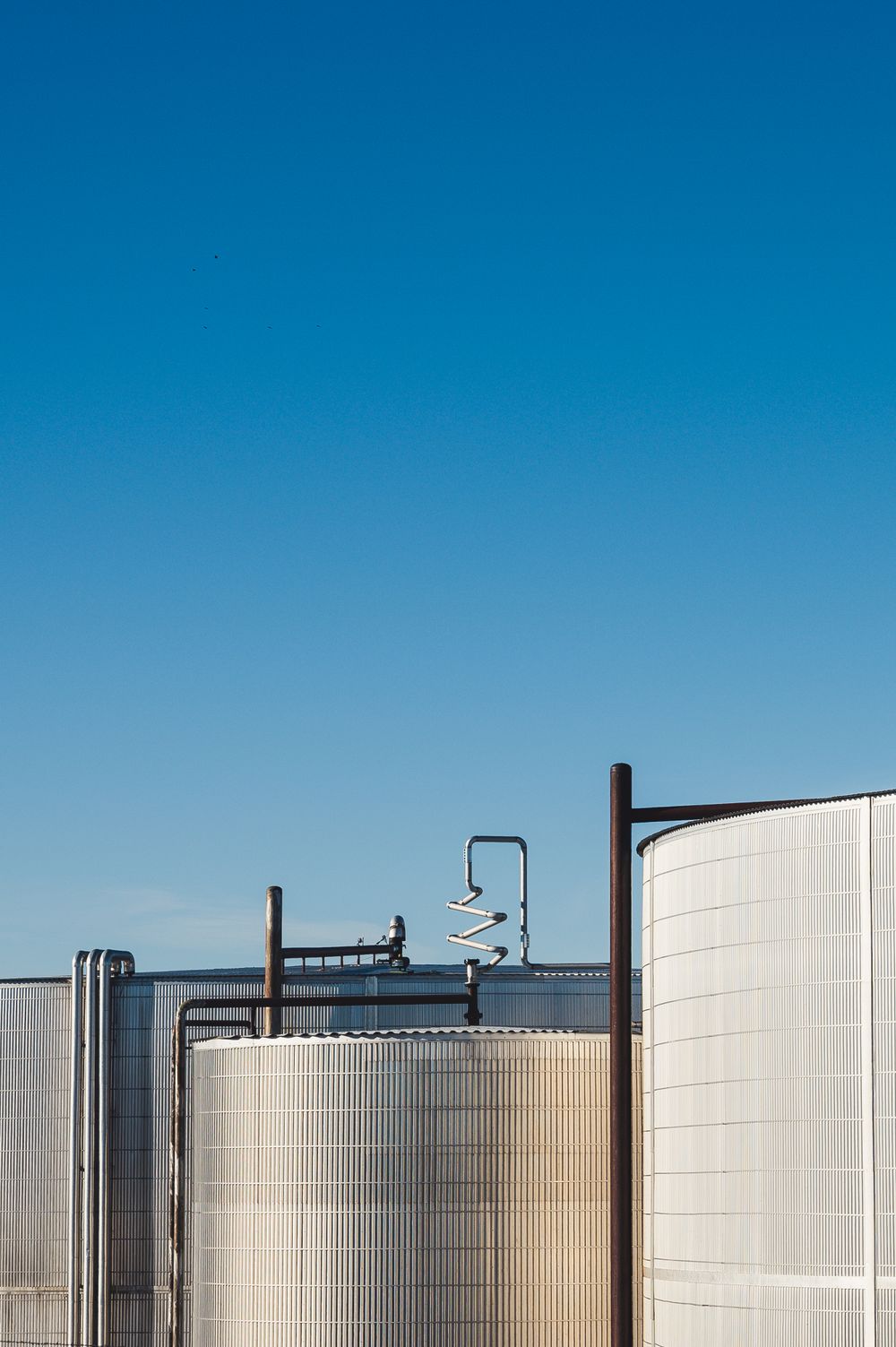
A galvanised water tank is a storage solution in which a steel shell is protected against corrosion by a hot-dip galvanised zinc coating. Protection works in two ways at once: the zinc layer forms a barrier on the wetted surface, and wherever the coating is scratched or steel is exposed at a cut edge, the zinc corrodes sacrificially and protects the steel cathodically. This second mechanism is what separates hot-dip galvanising from a layer of paint applied to the surface.
In material terms this tank fills the gap between plastic and modular panel construction. Plastic tanks are practical at small volumes, but as volume grows they reach their limits in shape stability and service life. Modular panel tanks are built for far larger scales and demand assembly space. A galvanised tank covers building and mid-scale facility demand in a single shell.
The condition of the coating plays a decisive role in service life, but it is not the only factor: water chemistry, sheet thickness and the workmanship of welded areas all affect the outcome. Zinc’s sacrificial protection covers small scratches and cut edges by itself; large areas of coating loss, deep impact damage and wide surfaces opened up by unsuitable fasteners exceed the scale of that protection. Zinc is also known to behave differently in hot water service, which is why galvanised tanks are considered primarily for cold domestic water and reserve volumes. Surface inspection before installation and periodic observation afterwards are therefore the most important part of maintenance.
On the water quality side, a tank is not a passive volume. Without a sealed shell, an insect-screened vent, a lockable manhole cover and regular cleaning, standing water deteriorates biologically. Because algae reproduce by photosynthesis, a light-tight body markedly reduces the risk of algal growth; this advantage comes from the opacity of the shell rather than from the material itself, and it applies equally to opaque plastic tanks.
Fire reserve is a common use for these tanks, but the fire volume is not a share to be dissolved into domestic water and consumed. The two needs are calculated separately; where required, differentiating the suction level prevents the fire reserve from being drawn down.
The tank is not a complete solution on its own. Storing water is the tank’s job; delivering it to upper floors under pressure is the booster set’s. When the two are not designed together, overflow, dry running and pressure fluctuation are inevitable — level control and dry-run protection belong to the system as a whole.
Placement is a structural decision: the filled weight is assessed against the capacity of the floor and the load-bearing system. Leaving access clearance around the shell for service and maintenance determines the cost of future cleaning and repair.
Key Features
- Hot-dip galvanised steel shell: the zinc both forms a barrier and protects the steel cathodically at scratches and cut edges
- Shape stability: safer behaviour than plastic at higher volumes
- Light-tight sealed body: reduces the risk of algal growth and biological deterioration
- Volume range suited to building and mid-scale facility demand
- Suitable for fire reserve and process water applications
- Long service life; maintenance burden stays low as long as coating integrity is preserved
How to Choose
- Intended use: domestic water, fire reserve and process water are calculated separately and not merged into a single volume.
- Placement and structure: the filled weight is assessed against the capacity of the floor and the load-bearing system.
- Coating integrity: transport and installation damage is inspected; large areas of coating loss and deep impact damage are repaired.
- Fasteners and fittings: galvanic corrosion risk at dissimilar metal contact is considered and suitable isolating components are used.
- Hygiene provisions: insect-screened vent, lockable manhole, drain and overflow line are planned from the start.
- The system as a whole: the tank is designed together with the booster set, level control and dry-run protection.
Get a free site survey and a quote for your project: (0501) 557 80 89 · bilgi@projenza.com
Reviews
There are no reviews yet.