Description
Best fit: office buildings, shopping centres, hotels, hospitals, factories, warehouses and car parks with sprinkler systems and fire hose cabinets, and any building where fire water pressure and flow must be guaranteed under all conditions.
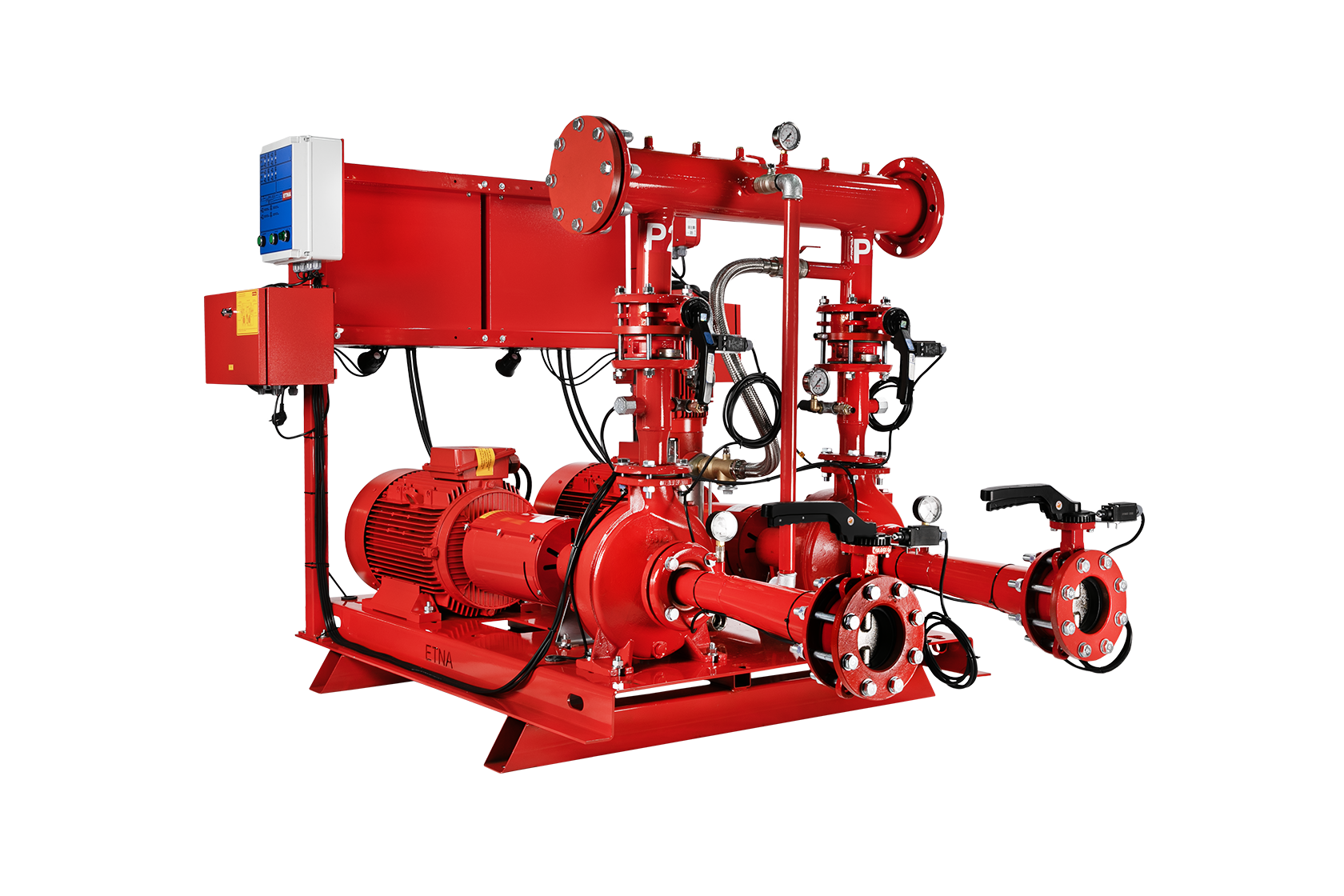
A fire pump set delivers the water a fire fighting installation needs, at the pressure it needs. What separates it from every other pump is its duty cycle: it stands idle for years, and on the day it is called it has to start without argument. The selection criteria are therefore reliability and redundancy, not comfort or running cost.
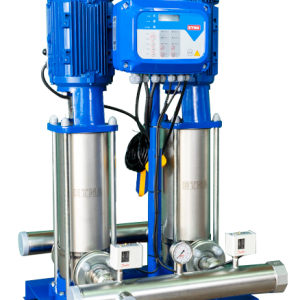
A typical set uses three pumps. The jockey (pilot) pump makes up the small pressure losses caused by minor leakage and keeps the system permanently pressurised, so the main pump is never started unnecessarily. The main pump runs when real fire flow is drawn. The standby pump takes over if the main pump fails to run for any reason, and is usually specified with a drive that does not depend on the mains supply.
The control logic is deliberately one-way: the pump starts automatically on pressure drop, while stopping is arranged to be a manual action. The point is to remove any chance of a pump shutting itself down while a fire is still burning. The panel is prepared for phase protection, alarm outputs and communication with the building fire detection system.
The water source and the suction arrangement matter as much as the pump itself. The fire water tank is sized to feed the system without interruption for the duration set by the design. A flooded (positive) suction arrangement is preferred: with the pump below water level it does not have to prime itself in order to start, which removes a failure mode at the worst possible moment. The suction line is kept short, correctly sized and graded so that no air pocket can form.
A fire pump is only as reliable as its testing regime. Periodic run tests, a test line with a flow measuring connection, battery and fuel monitoring on diesel driven sets, and valves locked in the open position are part of operating the building, not merely of maintenance. A measured performance test is carried out at commissioning and the results are recorded.
Key Features
- Jockey + main + standby architecture: staged operation and genuine redundancy
- Electric motor or diesel engine driven main and standby pump options
- Control panel built around automatic start and manual stop logic
- Test line and flow measuring connection for periodic performance testing
- Manifold and installation solutions suited to flooded (positive) suction
- Alarm outputs and interface with the building fire detection system
- Measured performance test and documentation at commissioning
How to Choose
- Nature of the protected risk: the sprinkler and hose cabinet design sets the required flow and pressure; the pump follows the design, never the other way round.
- Water source: fire tank volume and the period for which the system must be fed without interruption.
- Suction arrangement: flooded suction or not, tank level relative to the pump — suction conditions directly affect starting reliability.
- Drive selection: electric motor, diesel standby or generator backed supply; the power failure scenario is decided at the design stage.
- Panel and automation: automatic start, manual stop, alarm outputs and integration with fire detection.
- Pump room layout: test line discharge, ventilation, exhaust for diesel sets, vibration isolation and service access are resolved from the start.
Get a free site survey and a quote for your project: (0501) 557 80 89 · bilgi@projenza.com
Reviews
There are no reviews yet.