
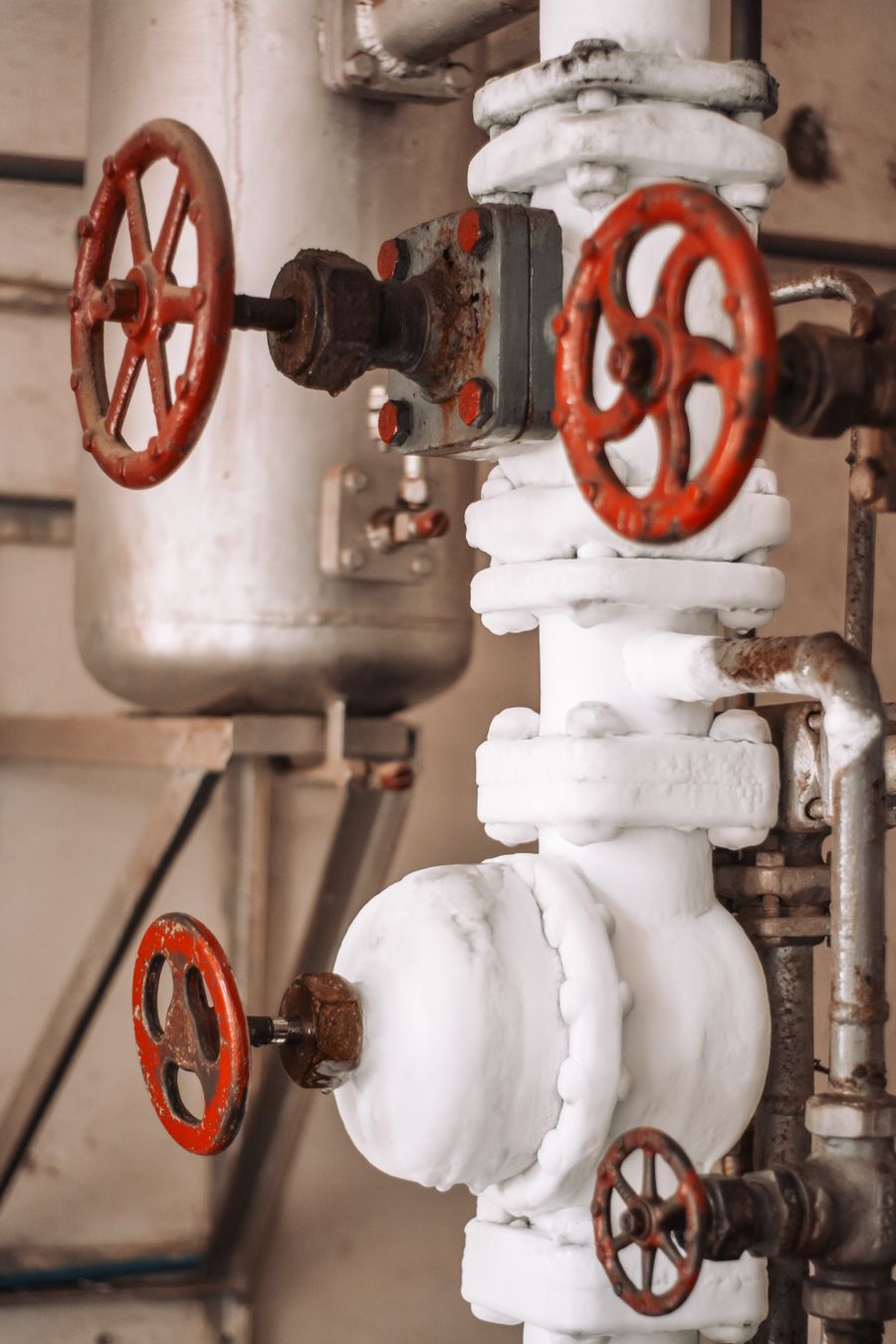
Description
Whether you control a heating circuit by throttling it or by lowering its temperature decides how the whole installation behaves. A two-way valve changes the flow; a three-way valve keeps the flow steady and changes the temperature. They are not interchangeable.
A two-way valve has one inlet and one outlet and either throttles or fully closes the flow through a circuit. On/off versions bring a room or a zone in and out of service, while modulating versions vary their opening steplessly and continuously trim the flow to the circuit. Because total flow rises and falls with the control signal in a two-way system, the pump and the balancing arrangement have to be thought through for that variable flow.
A three-way valve either combines two inlets into one outlet (mixing) or directs one inlet to two outlets (diverting). In a mixing application, hot supply water is blended with return water to lower the temperature sent to the circuit; the flow through the circuit stays broadly constant and it is the temperature that varies. Underfloor mixing groups, boiler return temperature protection and weather-compensated heating lines all work on this principle.
Mixing and diverting bodies have different internal flow paths and cannot be substituted for one another. Running a body designed for diverting in the mixing direction pushes the closing element against the flow, which produces noise and, over time, a loss of control accuracy. The intended direction must be confirmed on site against the flow arrow and the port markings on the body.
What really determines control quality is valve authority: the share of the pressure drop across the valve within the total pressure drop of the circuit it controls. A valve oversized for its circuit passes nearly all the flow within a small part of its travel; control stops being progressive and the system hunts as if it were on/off. Valves are therefore selected against the resistance of the circuit, not against the pipe diameter.
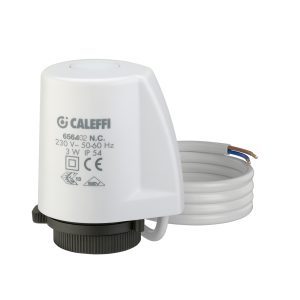
The actuator that drives the valve is part of the design as well. Thermoelectric actuators are quiet and low consumption and suit on/off control; motorised actuators accept a modulating signal and are preferred in mixing applications. Where the valve travels on loss of power — spring return, or stay put — should be decided up front on lines exposed to freezing and in safety-related duties. Models with a manual override make commissioning noticeably easier in the field.
Key Features
- Two-way body: flow control by throttling or closing a circuit — for zone service applications
- Three-way body: mixing or diverting duty that holds flow steady while varying temperature
- Thermoelectric and motorised actuator options — matched to on/off or modulating control
- Spring return and stay-put models — the fail position can be chosen deliberately
- Manual override so the valve position can be set by hand during commissioning or a fault
- Connection arrangement compatible with room thermostats, manifolds and zone control panels
How to Choose
- Duty first: switching a zone on and off calls for a two-way valve; lowering supply temperature calls for three-way mixing
- Mixing or diverting: the flow direction of a three-way body must match the application, or it will produce noise and wear
- Valve authority: size the valve against circuit resistance — an oversized valve turns control into on/off behaviour
- Control signal: on/off or modulating — the actuator type follows from this decision
- Fail position: spring return behaviour is preferred on lines exposed to freezing and in safety duties
- Medium and temperature range: glycol mixtures, domestic hot water and cooling lines each call for a separate look at seals and body material
- Connection type: threaded, union or flanged, chosen for the existing pipework and for service access
Get a free site survey and a quote for your project: (0501) 557 80 89 · bilgi@projenza.com
Reviews
There are no reviews yet.