Description
Best fit: businesses that use most of their electricity during daylight hours, buildings with unshaded roof area and adequate structural capacity, sites where the power bill is a visible line in operating cost, locations with an unstable grid when combined with storage, and investors looking for a fixed long-term energy cost.
A solar plant is not a panel purchase but a small generating station: panels, inverter, mounting structure, protection equipment and monitoring all work together. No single component decides what the system is worth; whichever link is weakest sets the return on the whole investment. Design therefore begins by reading the roof and the load, long before a panel brand is discussed.
What determines the payback of a solar investment is not only how much it generates but when it generates. Output peaks around midday; if the site consumes its own production at those hours, that energy is never bought from the grid and the benefit reaches its highest value. A site that stands idle by day and loads up in the evening will see the same array pay back far more slowly. Capacity is therefore sized against the shape of the daily load curve, not against the area of the roof.
Orientation and tilt change output gently; shade changes it harshly. A chimney, a lift tower, a rooftop air conditioning unit or a neighbouring building can pull down an entire string even when its shadow falls on a single panel for only part of the day. Shading analysis is therefore carried out before the layout is fixed, and on roofs where shade cannot be avoided the answer is either to split the strings or to move to panel level power electronics.
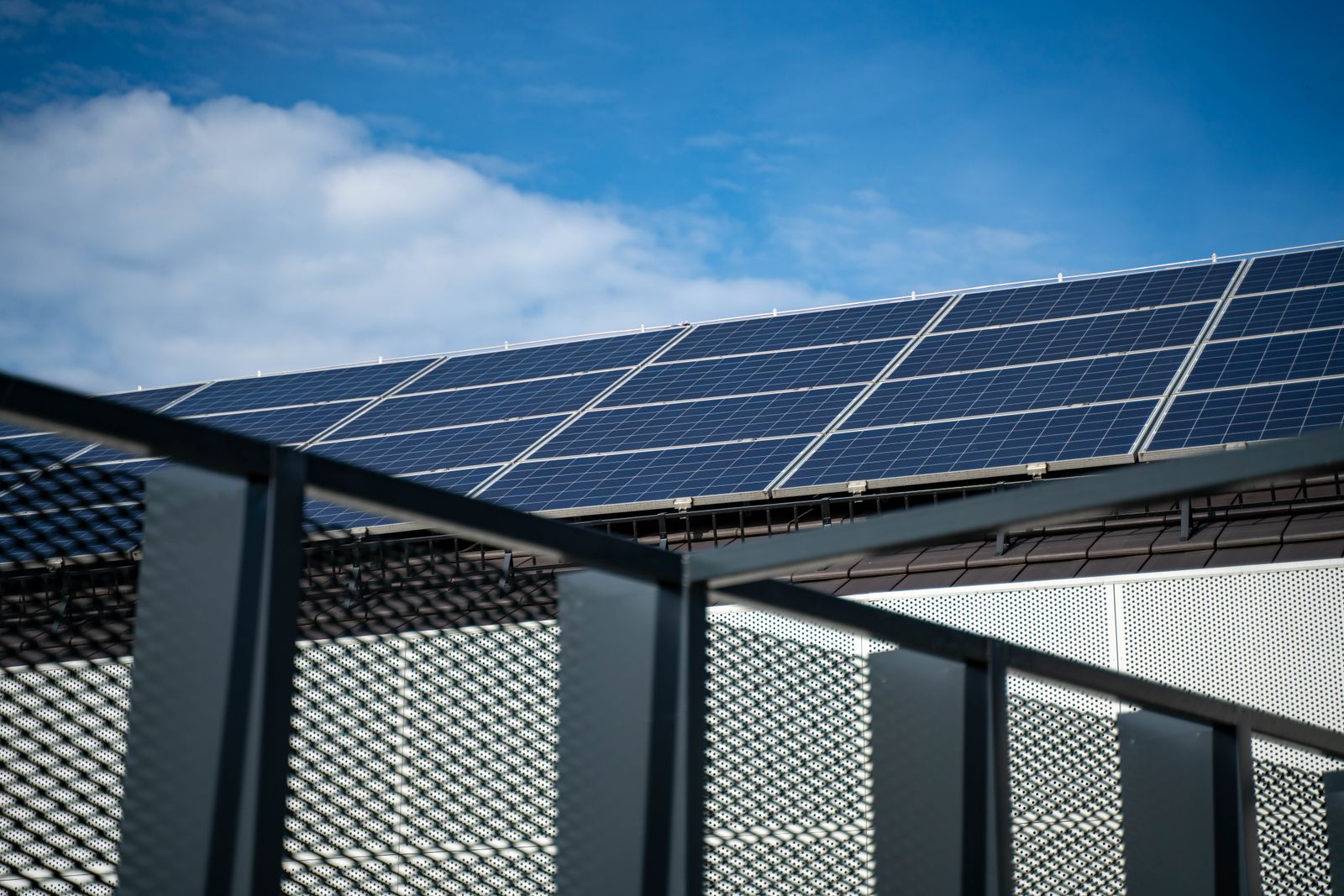
The roof has to carry both the added weight and the wind uplift for the whole life of the system. The suitability of the structure, the remaining life of the waterproofing membrane and the sealing detail at every fixing point matter as much as the electrical design: a system installed on a roof whose waterproofing is near its end makes that repair impossible without dismantling the array. Keeping air moving beneath the panels matters too, because a hot panel produces less.
On the electrical side, separate protection for the direct current and alternating current sections, earthing and lightning protection bonding, and a means of rapid shutdown for firefighting establish the safety of the installation. In service the work does not end at commissioning: dust, pollen and bird soiling build up on the glass and quietly erode output, while string level monitoring makes that difference visible before it reaches a bill. Regular cleaning, checking the tightness of connections and thermal inspection are the maintenance that protects the expected life of the investment.
Key Features
- Sizing against the load curve: capacity follows daytime consumption, not roof area
- Shading analysis before the layout is fixed, with string splitting or panel level electronics where needed
- Mounting structure matched to the roof structure and to wind uplift
- Fixing details that keep the waterproofing intact and preserve airflow beneath the panels
- Separate protection on the direct and alternating current sides, earthing and rapid shutdown
- Self consumption, export and storage backed operation weighed together
- String level monitoring so that lost output is noticed early
How to Choose
- Load profile: at which hours the energy is actually used and how far that overlaps the production peak.
- Roof orientation, tilt and sources of shade: chimneys, towers, rooftop plant and neighbouring buildings.
- Suitability of the structure, remaining life of the roof covering and the sealing detail at each fixing.
- Panel technology and its behaviour with temperature; the output a hot roof costs you.
- Inverter type and location: string, hybrid or panel level, with ventilation and service access.
- Operating conditions: how quickly the site soils, cleaning access, monitoring and the maintenance plan.
Get a free site survey and a quote for your project: (0501) 557 80 89 · bilgi@projenza.com
Brand We Work With

Reviews
There are no reviews yet.